
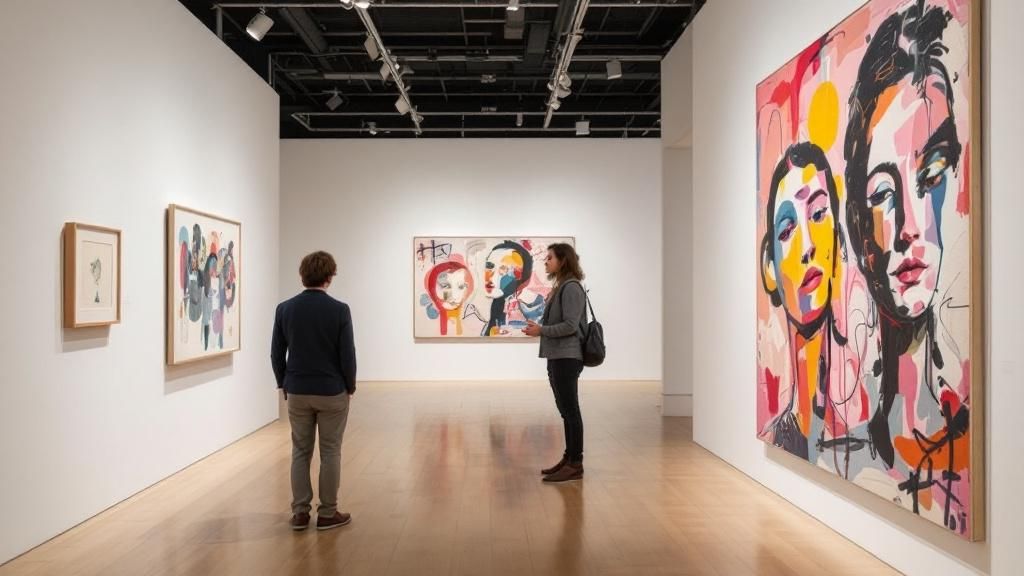
The Turner Prize has functioned as a barometer for current creative innovation, and this year’s showcase proves no exception. By featuring works that intentionally obscure the boundaries between abstraction and representation, the exhibition organisers have crafted a thought-provoking challenge to audiences’ assumptions about what art can express. This article investigates how the featured practitioners deploy unconventional techniques and conceptual frameworks to challenge our comprehension of pictorial communication, ultimately questioning whether the established divisions between abstract and representational art retain significance in current artistic practice.
Reshaping Abstract Boundaries
The Turner Prize exhibition this year deliberately dismantles established categories that have long governed artistic discourse. By presenting works that smoothly transition between abstraction and figuration, the curators encourage audiences to reconsider their assumptions about the construction of visual meaning. The exhibition shows that today’s artists increasingly resist binary thinking, instead embracing hybrid approaches that question how we interpret and interpret visual information. This curatorial approach prompts visitors to think more deeply with the artist’s intention and aesthetic experience.
These boundary-transcending works reflect a broader shift within contemporary art practice towards conceptual flexibility and experiential uncertainty. Rather than following rigid stylistic categories, the presented artists employ techniques that deliberately destabilise audience expectations. The exhibition reveals that abstraction and representation are not entirely separate territories but rather points along a coherent range. This reconceptualisation prompts sustained consideration about the way meaning develops through the dialogue among artwork, viewer perception, and contextual understanding, fundamentally reshaping artistic conversation.
The Development of Graphic Expression
Visual language has witnessed substantial transformation during the twentieth and twenty-first centuries, particularly as artists grappled with photography’s challenge to representational painting. Modernist movements at first positioned abstraction as a radical break from mimetic traditions, setting up seemingly insurmountable conceptual divides. However, modern artists increasingly recognise these earlier divisions as imposed limitations. The exhibition demonstrates how visual language evolves organically, drawing in multiple inspirations and methodologies that go beyond traditional categorical boundaries, expressing our ever more intricate visual culture.
Contemporary artists now combine elements from abstraction, representation, and conceptual frameworks with unprecedented sophistication. This combined methodology recognises that visual communication operates through multivalent channels simultaneously. The Turner Prize exhibition showcases how artists employ colour, form, composition, and symbolic reference to create complex significations that defy singular interpretation. This evolution demonstrates that creative vocabulary has matured beyond dogmatic constraints, embracing instead a nuanced vocabulary capable of expressing the complexities inherent in modern life and perception.
Present-Day Interpretations
Today’s artists approach abstraction with markedly distinct theoretical foundations than their past practitioners, shaped by postmodern discourse, digital environments, and worldwide artistic practices. Rather than chasing abstraction in its purest form as an conceptual destination, present-day creators treat abstraction as means of expression within wider strategic frameworks. The exhibition features works wherein geometric shapes, gestural elements, and colour dynamics sit alongside figurative imagery and text-based components. This multi-faceted approach reveals contemporary understanding that visual communication emerges through complex interactions rather than through single stylistic positions or aesthetic principles.
The chosen artists display considerable skill in navigating multiple visual registers simultaneously, producing works that repay sustained contemplation and interpretive flexibility. Their work indicates that contemporary art increasingly functions as a dialogue between artist, artwork, and viewer, rather than as a one-way pronouncement. By incorporating diverse visual languages, these artists recognise that meaning-making in contemporary culture demands sophisticated navigation of competing aesthetic systems. The exhibition ultimately proposes that modern critical understanding demands viewers abandon fixed categorical approaches, adopting in its place the productive ambiguity that characterises advanced creative work.
Public Response and Community Dialogue
The exhibition has sparked substantial debate amongst critics and art scholars, with perspectives ranging from enthusiastic endorsement to careful reservations. Traditionalists have queried whether the blurring of abstract and representational boundaries constitutes genuine innovation or simply aesthetic confusion. Conversely, progressive voices have praised the curators for challenging entrenched categories that no longer capture current artistic approaches. This range of viewpoints demonstrates the exhibition’s significance as a driver of substantive conversation within cultural institutions and the broader public.
Public engagement with the exhibition has exceeded expectations, attracting diverse audiences beyond the established art-world circles. Social media discussion shows that visitors are actively grappling with the artistic theoretical foundations, sharing interpretations and challenging one another’s perspectives. Museums have reported increased footfall and extended viewing times, suggesting that audiences are deeply interested in understanding creative intent. This grassroots enthusiasm proves that present-day creative work can connect deeply with the wider audience when presented with sufficient contextual support and cognitive accessibility.
The exhibition’s influence reaches beyond immediate assessment by critics, potentially affecting future curatorial approaches and artistic orientation across institutional frameworks. New artists have identified the show as a pivotal moment, endorsing experimental approaches that merge abstract and representational work. Educational institutions have begun including the exhibition’s themes in their teaching programmes, recognizing its educational value. As discussions continue onward, the Turner Prize exhibition seems positioned to occupy an important place within the history of contemporary art, reshaping conversations regarding artistic classification and creative possibility.
